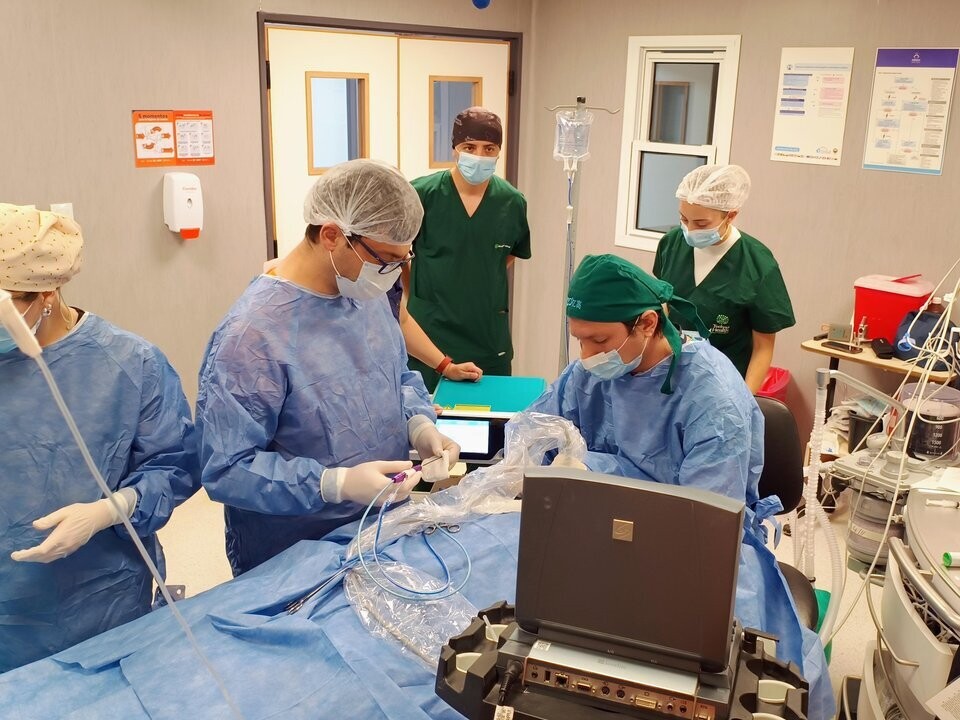
The healthcare system is operating at its limit, and paradoxically, 75% of sector professionals point to manual data entry as the weakest link in the care chain, which overburdens clinical staff, who report information fatigue in 78% of cases. They report feeling overwhelmed by the volume of manual administrative tasks that take away quality time with the patient. In this context, a medical error is not an exception but a consequence of the system, as collected by Noticias Argentinas agency from testimonies. The study "Unmasking Complexity in the Health Sector" by Zebra Technologies demonstrates that automating workflows returns up to 2.5 hours per shift to nurses, allowing them to focus on patient recovery rather than filling out forms. However, it's not just about incorporating technology to alleviate tasks; it must also be interoperable, as only 40% of hospital devices are fully integrated into a single network, creating information silos that hinder real-time decision-making.
Since the pandemic, telemedicine has been applied, and the practice at a distance has extended to emergency calls, orientation consultations, and managing medical orders. A virtual doctor is an artificial intelligence available on a website that, through a series of questions to the user, offers a more or less specific (and more or less accurate) diagnosis. The most characteristic symptom is selected, and from there, a journey through a list of "yes or no" questions begins, guiding toward a diagnosis based on the answers given. For example, if the main symptom selected is shortness of breath, the first question is whether it started recently. If the answer is "no", the next question is whether they feel great difficulty breathing and are expelling a frothy, pink secretion. If they answer affirmatively, the virtual doctor indicates that the symptoms may correspond to pulmonary edema, after briefly explaining what it is, it invites the user to go to the emergency room quickly.
The complexity of hospital operations in Argentina demands a transition from manual inventory to asset intelligence. The implementation of RFID technology and digital identification with high-quality consumables provides total visibility of the supply chain, from the entry of the supply to its final application. This strict control of assets and patients is the only path to "zero error." By digitizing treatment verification, institutions not only protect the lives of users but also shield their operations against the high legal and operational costs derived from failures in the care chain. Efficient asset management allows the medical team to know, in seconds, the location and status of each vital resource, optimizing the response to critical emergencies.
For the next two years, 90% of health leaders plan to increase their investment in mobility and real-time locating systems (RTLS). The big bet is on RFID (radio frequency identification) technology, which allows tracking not only patients but also critical assets such as ventilators, infusion pumps, and blood units, ensuring they are available, disinfected, and in the right place at the exact time.
Unlike decades ago, the 2026 patient is a "digital auditor." The study highlights that 80% of hospitalized users feel substantially safer when they see medical staff using technology to verify their identity and the treatment they are about to receive. "The patient in Argentina is no longer a passive actor. Today, patient identification is associated with specialized supplies for the sector, the use of a medical tablet or a wristband scanner, with high-quality care. Trust is no longer based solely on the prestige of the institution, but on the digital evidence that the process is secure," comments Cynthia Abrego, Director of Supply for Latam at Zebra Technologies. "The challenge in Argentina is not medical talent, but equipping it with tools that eliminate operational friction."